Wednesday, March 29, 2023

Greener Notes - Centennial Edition

 Year of the Rabbit


To honor the 100th anniversary through this season, I'll include a little visual history with every post.  Back before digital cameras and cell phones, I documented course improvements with real film.  I still have some paper pictures from the early 2000's as well as hundreds of digital photos from the following years to current day.  Many of the course changes made over the last 20+ years have been long forgotten. Some where good ideas and others less so.  Along with the usual course updates and reports, expect a short stroll through memory lane, from a property improvement perspective.  


1990's


2015-16

Present day

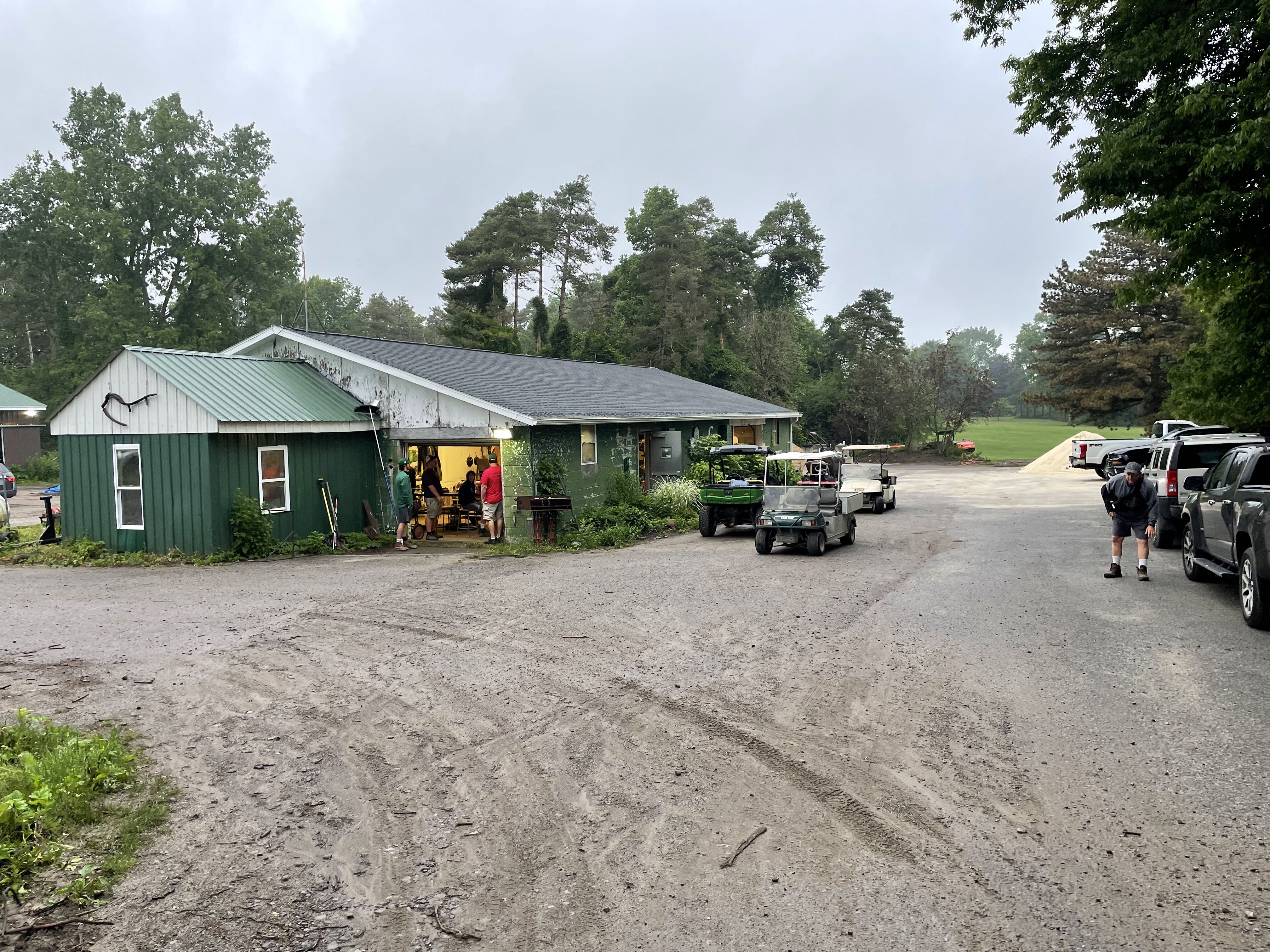
Maintenance Facility Progress

1999-2022

March 2023 makes it 5 months since we broke ground on the new building.  Progress continues at a brisk pace as we close in on occupancy in April. 

2023

New Electric, phone and data, and a permanent municipal water supply have all been installed.  If you've been following along on Instagram you've seen the process unfolding.  


New 3-phase power

Permanent water and septic at the shop will be a treat.


Course Work
The crew has been split between our usual winter season maintenance, repair and sharpening and helping contractors with trenching, conduit, and water line installation. With the mild winter and absence of frost in the ground, getting heavy equipment on the course for tree work has been limited.  The exception has been a contracted logging of the woods between holes 4, 5, and 6.  About an acre of Scotch and Austrian Pine were thinned out to increase air circulation, light, and improve playability for those 3 holes.  50-60  trees were left in the area to create a more aesthetically pleasing parkland setting similar to the rest of the course.  All the snags,  underbrush and stumps have been ground out and grass will be planted throughout the new space.  Finding errant shots will be easier and maybe even playable. The area will be a work in progress through the season as we transition it from wood lot to parkland. I expect it to be fully in play by mid to late summer. 
Aspect from #4 

  
Rotary Axe


Trench Warfare

As play starts returning to the course, golfers will be met with 2  major trenches that cross three holes.  The new municipal water line crosses 7 fairway and the new electric service crosses 16 and 17 fairways and rough.  As ground dries up and weather cooperates, trenches will be raked, seeded and sodded.  The target for these areas to be completely back in play is by Memorial Day. Cart crossings and routing through these areas will be regulated. 

 
16 fairway

7 fairway

The Final Countdown
As this gets posted it's now March 29 and opening day is around the corner. Whatever weather may come Tuscarora always opens on  either side of Masters week and this year's no exception.   This year we're shooting for April 5th for opening for walkers.  Carts will be allowed when drier conditions prevail.  Some late breaking news - after a years wait, the new practice mat system is on site and ready to be installed. The mats will be in use until we see soil temps in the 50s. Welcome back!


Sunday, November 6, 2022

La Nina in Control

Making Hay


With the amazing weather pattern we've enjoyed for over a month we're seeing another year of extended golfing conditions and excellent working weather.  Leaf drop is almost over as we wait for the oaks and some of the maples to let go. We appreciate you bearing with us as we try to keep up with leaf work - it seems never-ending and an extra challenge working temporarily short-handed.   

Not all that glitters is green


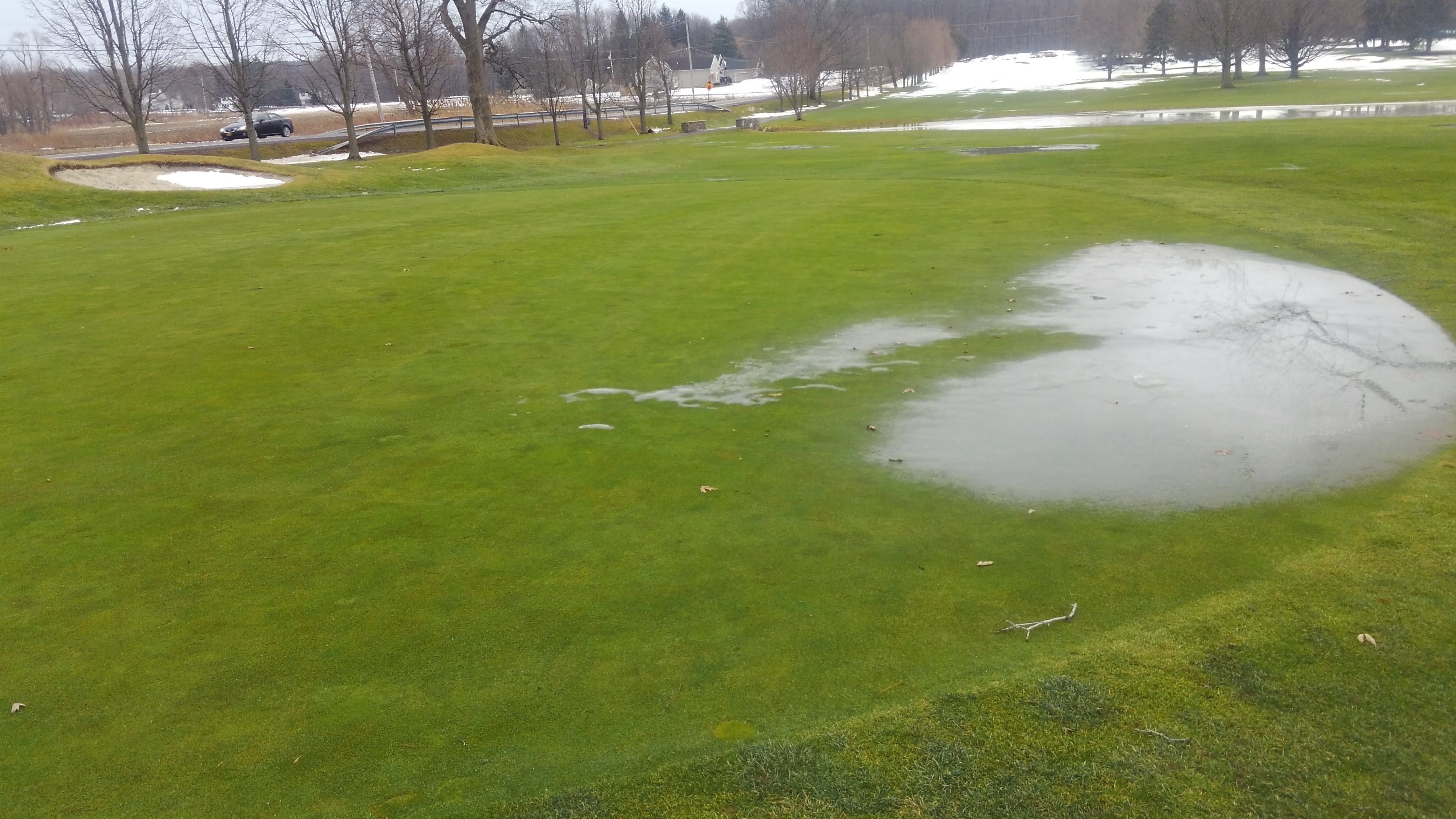
Although mild weather is great for your game and mental health, the jury is out on how it affects winter hardiness of Poa annua on greens. As the picture above reminds us (9 green in April 2022), Poa annua does poorly when it's 'woken up' mid-winter and then rapidly refrozen.  This isn't a new phenomena, it's well-known for the species.  What's new for our latitude is trying to gauge how much a delayed dormancy (warmer autumns) might help or hurt the plants winter hardiness.  In a perfect world the plants harden off slowly as cold weather arrives in October/November (in our region) and enter a state of suspended animation for the remainder of the winter. Since 2014 that's not been the case. 

Last year we got lucky as many courses in our region suffered extensive winter damage through no fault of their own and some escaped without a scratch, again, through primarily good luck.  There's some correlation with how high greens were mowed going into winter (too low-too late increases damage) but it's anecdotal evidence for now.  Unfortunately without a real crystal ball we get to wait to see what's in store and hope for a colder than normal, no-thaw winter. 

New Digs


It's been there a while...judging from aerial photography from the 1930's the original shop looks like it's been standing on or near the same foundation for around 85+ years.  It's served its purpose dutifully and was adequate for what was required of it. 


Tuscarora's history is rich in character and lore. As the club was finally able to purchase the land and have a hand in their destiny, improvements flourished, and they still do. The latest of these 'upgrades' coming on-line in spring 2023 is a turf care facility that can truly be called state-of-the-art.  


The plan for this facility has been a work in progress since 1999.  It was never a secret the golf club needed a new maintenance facility.  We knew there'd be a time and place for it given the aspirations of the members.  As we bring it up out of the ground and into reality I'll be doing more posts on the benefits and features it adds to the property and how those things improve the golfing experience and the clubs place in the community. Not only will our maintenance staff have a home they can be proud of but they'll have a place that is truly able to provide the technical support and safety a workplace should provide.

Still Waiting


 Remember those awesome practice mats for the range we ordered in February?    It's been an experience this year dealing with it and trying not to blame the company for things out of their control.  If you're in manufacturing, or a distributor for a manufacturer who's dealing with supply chain and labor issues - hats off to you. It's supremely frustrating to have folks  completely prepared only to have to tell them there's yet another delay.  Our latest update from this company was 'before Christmas' after postponing three separate times through the season.  Hope is we'll have them by opening day in 2023. Fingers crossed. 

A Wormy Situation


It's far and away the worst attribute of the property. Of any disease, weed, insect, or winter injury - worm casts are the final boss.  It's sparked debate over grass type, mowing schedules, height of cut, and management acumen. The list of remedies from the course across town, or the self-proclaimed turf expert who likes to give their opinion seems never-ending and it's all well intentioned. What I've settled on for the time being is a solution that I'm certain works and works universally.  Namely it's mowing when the turf is dry. It's the way forward. 


To accomplish this we've added a third fairway mower to our fleet and will be coordinating with the Pro Shop to fit our fairway crew in during slower times of the week. What that may look like from the outside is fairways being mowed during early afternoons. We won't be making golfers wait and will schedule this to minimize contact with play. 

Other plans are using some new growth regulators during the wormy seasons to reduce the need to mow as often. This lessens the smearing that the mowers do which is where the  cycle of damage starts.  It also gives the fairways a tighter denser canopy that can improve the ball lie in spite of the castings. Notice the difference in the picture below of turf treated from 200 yards in on #5.  It has a slightly different color and texture than turf from 200+


We're going to find a solution for this problem without resorting to measures that are unsustainable if not vaguely illegal.  The talk of bentgrass fairways isn't dead, but there's much more to be discussed and prepared for before we embark on that voyage. 

In the interim, there's a mechanical fix here that will be explored.  It's affordable, safe, and sustainable without resorting to chemically nuking the worms from orbit.

Platform Change


The grounds department doesn't have a big social media footprint by design. We keep it impersonal and drama-free because nobody needs that. We try to provide information on all things turf and golf course adjacent, especially relating to Tuscarora.  As twitter goes through whatever its going through I decided to take the account over to Instagram for good.  The sharing and production tools are better and I hope the engagement and usability is too.  As the curator of the account I wanted something that's more attractive to use and experience. 

Without opining on twitters latest foibles it's enough said that we have a new social media home for the Tuscarora Grounds Dept. on Instagram @tuscaroragroundsdept 

https://instagram.com/tuscaroragroundsdept?igshid=YmMyMTA2M2Y=

Please visit us, interact, and don't hesitate to DM us for any burning questions about why greens are slow, omg who cut the pins, why people won't fix ballmarks, and whether DeeDee ever gets tired.


Monday, July 25, 2022

 Half-way There

Just a quick midsummer update on the condition of the course as we come to the end of some short-lived drought and heat .

High and dry the way we like it - up to a point. 

Management of golf course turf generally hinges on two things - the schedule for the season and weather.  Ultimately if weather conditions aren't conducive for intensive maintenance, then the informed decision is to manage conservatively and return to more aggressive management when the weather allows for it. We can 'peak' the course for events only so many times and for a limited amount of time as weather allows.  Prolonged heat and drought are not ideal and will always eclipse sustaining 'tournament conditions'.    

Slow and Steady Wins the Race

The 2nd green looking healthy and full in late July is no accident. Time has taught us conservative management through adverse conditions pays dividends over the course of the season.

Without diving too deeply into what goes into making agronomic decisions through challenging weather, it's enough to know these basics; When there's unusual risk from prolonged high heat and drought - greens especially will be put into a safer mode of management.  The things we do to attain and sustain ball roll distance is turned down a notch in order to lessen risk of injuring turf from mechanical and physiological damage.  This allows the plants to hunker down, grow, and cool themselves and as they become more freely growing they become a little more lush than we normally keep them which noticeably affects ball roll.  

As more moderate conditions return we can safely 'turn the screws down' and start back into our more intensive management practices.  It's a little give and take as conditions warrant as is the nature of the game.   A little caution with the greens through hard conditions is normal and expected and keeps them predictable and healthy as we approach late summer and early fall golf.  


Wednesday, June 29, 2022

SUMMER SESSION

SUMMERY

After a nail-biter of a spring where it seemed like a dice roll for whether you had dead greens or not, temperatures finally started to climb and the grass started to move out and catch up.  It's times like this where patience is your friend.  If you have the room and support to let nature take its course the grass generally does what you expect. Hats off to  course managers in the region that had more severe damage and a less understanding clientele or impatient people and still managed to pull through and recover.  Unfortunately the likelihood of it happening again is increasing.  Growing Poa annua on greens in the northeast is an adventure for sure.
Winter injury on 10 green in April 


10 green in June  

SANDY
11 green capcon with pro-angle

Bunker lining and new sand was taken care of in April and May.  Although it was a stretch for the maintenance crew, it gave us what we were looking for which was the knowledge that it will work in our rocky soils, and that the drainage problems in our worst bunkers is surmountable.  These test bunkers were done to demonstrate the procedure, cost, and to give the membership an idea of what's to come if the board decides to pursue the rest. 

SEATED
New benches going out

Plaque sample


The new (memorial) benches are all in and are being placed on the course this week.  If interested in sponsoring a bench for your family or loved one, contact the Pro Shop to get on the list for the next batch.  Plaques are still on order and will be mounted as they arrive - said another way: If a plaque isn't on your bench, it's because it hasn't arrived yet. 
Since the new benches are longer than the old ones some course equipment had to be temporarily removed. It will be replaced in time.  This means there will be a missing ballwasher or garbage can on occasion.  Please plan accordingly for the rest of the season.


Sunday, April 10, 2022

Spring has sprung

Tiptoe through the...


As this is being written, it's Masters week.  It's one of the handful of times during the year that the excitement around golf is exuberant and positive for golfers and maintenance departments alike.  For year-around northerners it's time for spring cleaning or dusting off the clubs and getting those grips looked at (because that's surely the problem). It's time to get out there, finally, and play golf.  
As for the golf course, things went largely to plan over the winter. Fall clean-up benefited from our seemingly new normal of a delayed winter which lets the crew get after all the nooks and crannies where leaves like to hide.  Our annual winter project of tree harvesting retired 37 specimens to their creator. Unfortunately our usual ordering window for spring tulips fell victim to supply chain woes and selection was non-existent, so the early spring color at the club entrance and pro shop will be missed this year. 

Winter Injury 


While I can't say it's the worst winter injury the course has seen, the past winter did give some of the greens a black eye.  For a more in depth explainer of why winter injury occurs, there's an addendum here. For the purposes of keeping this blog entry concise it's enough to understand that while some of the greens were injured, most weren't and I expect better than 90% recovery by Mother's Day.

Bunker Renovations


In December the crew removed the sand on holes 11 and 18 and installed drainage.  The next step in this process will be installation of a 'pervious' concrete liner and new sand. The reason we're going through this process is to test the product 'CapCon' as well as to demonstrate the ability to use sump pits to drain our rocky soils as we pursue better bunkers. If successful, and the bunkers meet player expectation, we'll work with the green committee to schedule the rest of the course bunkers for renovation. Bunkers at Tuscarora are one of the two weak spots on the property due to their age, lack of drainage, and no liners to keep dirt from contaminating the sand.  This is our first step in improving them. 

Fairway quality

3 Fairway unmowed in April

Another perennial challenge we deal with is on fairways.  Reasons they remain a challenge are grass composition and an increasing worm problem. Grass type is a mish-mash of  rye grass, bentgrass, poa, kentucky bluegrass, and fescue - good for the rough, but terrible at fairway height.  These grasses are difficult to cut cleanly in the spring and fall due to wetness, and are prone to heavy worm casts that damage the mowers and smother the turf. The variation in grass types further add to the inconsistency in  growth rates and reacting to growth regulators in unpredictable ways.  
Options to improve them exist.  The most effective option is to change the grass to one species. It's a fix that would dramatically improve aesthetics and playability.  However, it's also a fix that would require the most in cost, disruption, and future maintenance commitment to keep the bentgrass pure and poa free. For best results it also would require a planting time in the middle of August which would affect golf, albeit temporarily (approximately 1 month). Courses nearby that have majority bentgrass fairways are Corning CC, Turning Stone, Bellevue CC, Cortland CC, Timber Banks, Saratoga National, and Lakeshore YCC among others. 
A second option is to mow the existing fairways when they're dry and free of dew or wet worm casts.  'Dry mowing' is a technique we use when we need the fairways to have a perfect cut. It's possible when we have access to the course in the late mornings and afternoons. Currently those times are only allowed during special events such as Member Guest or NYSGA and CNYPGA events when we can block play or otherwise allow us to get the mowers on the course without disrupting play. It works and there is no associated cost to it. 
What we'll be attempting this spring is a trial of this method through creative scheduling and by adding a third fairway mower to the lineup so the mowing crew can move faster. The goal will be to wait for fairways to dry out before mowing.  Nothing permanent is being implemented. We'd like to look at all options for making fairways better, if they exist, without moving to a conversion to bentgrass which is a much more serious discussion and commitment.   
To that end, we'll be receiving a visit this week with the regional USGA agronomist John Daniels to further discuss the fairways and talk about any options and recommendations he may have. 

New practice mats


Due to property constraints the practice tee is too small for the size and rate of use it gets. 
A high quality practice mat has been purchased to use for members and outside events when the grass needs a break or when there is no grass left.  Mats will be installed in mid-May while the concrete pad they sit on will be poured in April. 


Saturday, April 9, 2022

Winter Injury Addendum

An ideal winter sees the greens remaining frozen through the soil profile, mostly ice-free and either covered with an ice free snow pack, or no snow at all. No thaw and refreeze takes place.  In the pictures below we like to see no ice layer at the surface and crunchy white snow: 


Older courses, like Tuscarora, have greens composed of a few different grasses.  Within that composition are species that are sensitive to ice cover and mid-winter thaw.  When we experience winter injury, damage is suffered on the Poa species in the green. Greens at Tuscarora are 30 to 70%  Poa. Newer Courses (60 years and younger) and courses that tend to be wet, have higher populations of creeping bentgrass which fares better through challenging winters. Bentgrass normally see zero injury.  Another factor that favors injury susceptibility is how intensive maintenance is. Courses that keep mowing heights low and restrict fertility through the fall to meet golfer demand for fast greens often suffer the worst when the winter is harsh. 


Poor drainage = injured turf

Greens comprised of Poa annua suffered the heaviest winter damage in drain swales and shaded areas. Predicting damage or preventing it has more to do with Mother Nature and luck unfortunately. University research on cold weather hardiness and freeze/thaw cycles is ongoing and although we know the mechanics behind the injury, avoiding it is more elusive.  If you enjoy data, the science of climate change is fascinating. Whether guided by prehistorical records, earth axis tilt/wobble, or more modern theories of  human civilization affecting warming, what's likely is over the next 100 years, northeastern winters will be warmer and wetter. This in turn, will mean Poa greens will likely suffer this damage more regularly.    


Where we go from here isn't far.  As you can see in the video, there is still life deeper down in the canopy.  From past experience we know that the majority of Poa that gets injured will regenerate from seed that's naturally always in the soil as well as from any vegetative part left intact from the winter damage.  


With regard to covers, in this instance, greens covers wouldn't have defended against either ice damage or freeze thaw cycles.  Greens covers mainly function to protect greens from wind desiccation and to speed up soil warming on courses that suffer from windy open winters.  Helpful for recovery, not so much as a freeze/thaw/ice preventative measure.


The hard part will be the waiting. We'll deploy black shade cloth to warm the worst spots when needed as well as apply fertilizers that target the recovery process.  Expect slow bumpy greens through April up to around Mothers Day.  By late May I expect to see a return to seasonally normal green speed and a full recovery by Memorial Day.  It definitely could've been worse, so we can be thankful that for whatever reason the conditions didn't damage more greens.  Whether this is a symptom of regional changes in climate, or just bad luck, try to find comfort in the fact that this isn't the first time, or the last, that Poa greens in the northeast will see winter injury.  


Monday, April 26, 2021

Spring Round-up

Course Conditions


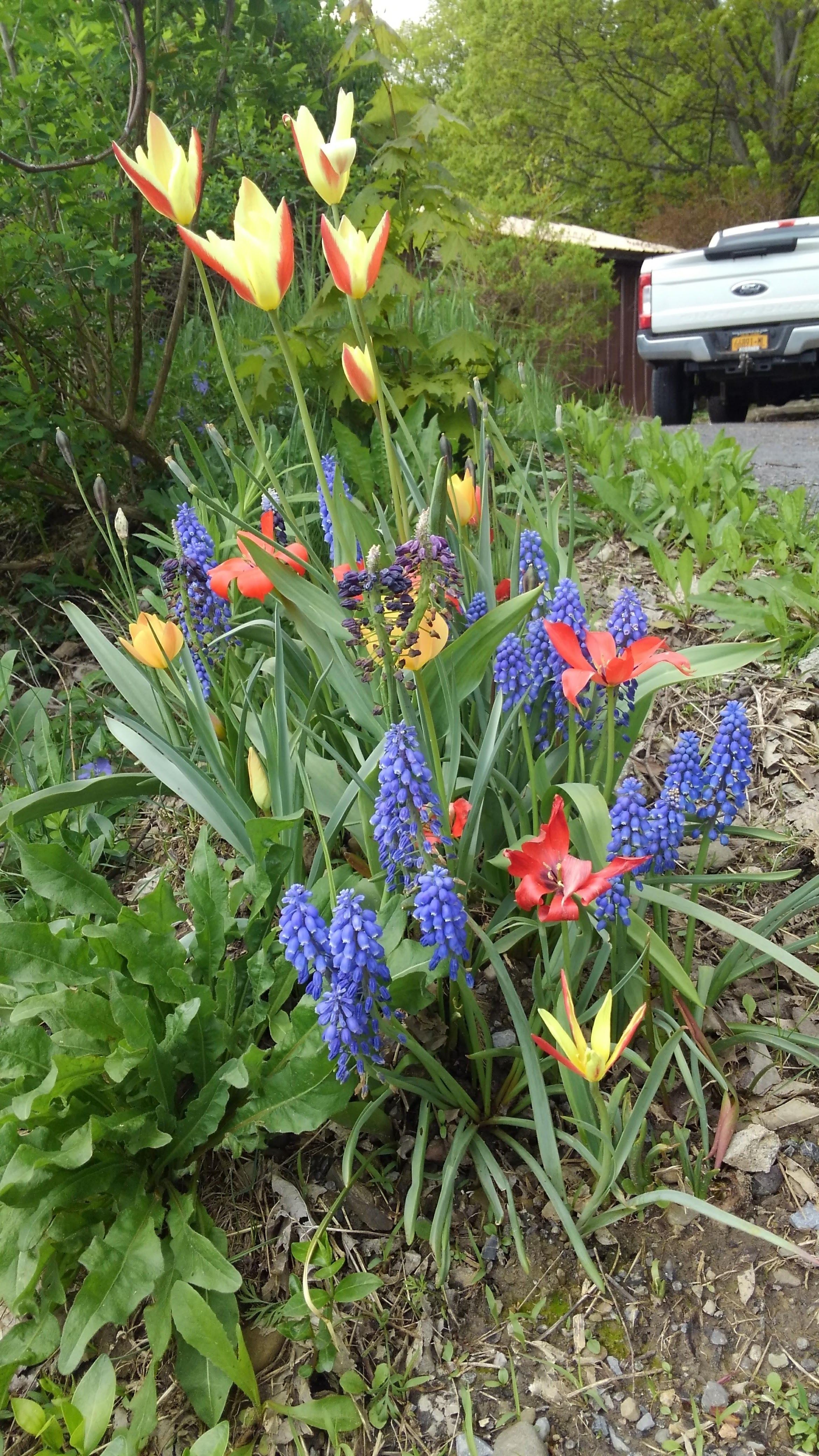
Tulips are on deck

Thanks to a cold and 'normal' winter, the course came through with flying colors.  The fear of winter freeze damage is lessened when no major thaws occur.  Midwinter thaws can do damage in a few ways but the most worrisome is weather that lets plants break dormancy and grow when they shouldn't. Results are often severe and can be fatal to certain species.  So, as our climate responds to our collective inputs we can be thankful for more normalcy and less chaos when we get it.  

Spring Growth 

Spring lushness


As mud season gives way and we move into May, as normal, there will be a growth surge in all areas on the course.  It's as much a blessing as a curse for our staff.  As you see in your own lawns and gardens, growth is fast and heavy, the grass seed finally pops and it's off to the races.  

To manage this we employ hormone regulators that slow the greens fairways and rough.  It's an imperfect solution but one that buys time for our operators to keep up with the speed of growth and increased golfer presence.  Be assured we use all of the resources available during this time to keep conditions playable. Within the constraints of hours in the day and avoiding daily play we mow as much as we're outfitted to mow. There will be moments during this time when it's too wet or we're struggling with older equipment when rough (especially) will get ahead of us - this is temporary.  

As summer heat moves in and the rock the course sits on heats up, the rough will dry up and thin out.  Your annual patience and understanding prior to that time goes a long way.  And remember, those heroic chips from 4 inch rough after you've short-sided yourself are character-builders!


Project Update


5/14

As the sod on the new tees knits in and rooting gets established we await better temperatures to really get them into gear. Seed on the banks is idling as temperatures aren't  quite there yet. As soon as growth can sustain it, we'll  mow them down closer to tee height and allow play.  Tees will open soon as temperatures climb and stay put.
#2 descent

On 2 tee we've added a more naturalized look to the descent. The limestone outcropping we were previously trying to mow was exposed to enjoy the natural beauty of the stone. The final look will be a weed-free meadow fescue laced through the 'mini cliff'.  We hope it'll  be an attractive addition to a fun hole.

 5th hole considerations 
As the yardages from the new tees will bring different looks and landing areas there has been much discussion regarding the trees on the inside of the dogleg on #5. 
As hole strategy and long term planning are discussed, there is a likelihood that trees will be pruned or removed to make the hole play as a true par 5 for all handicap levels. More importantly it will create more options for the player and offer a better quality shot than currently exists. The entire process may involve more adjustments than merely tree removal.  More to come as it develops.